
The days are getting shorter, the fire is crackling, and for musicians, the holiday season offers that rare, golden commodity: time. Time to unwind, time to reflect, and most importantly, time to reconnect with our instruments. If you are a hurdy-gurdy player—whether you’re just finding your cranking arm or you’re a seasoned gurdy-guru—this Christmas is the perfect moment for a technical and creative “tune-up.”
But we aren’t just talking about rosin and cotton. We are talking about a tune-up for your mind and your musical soul.
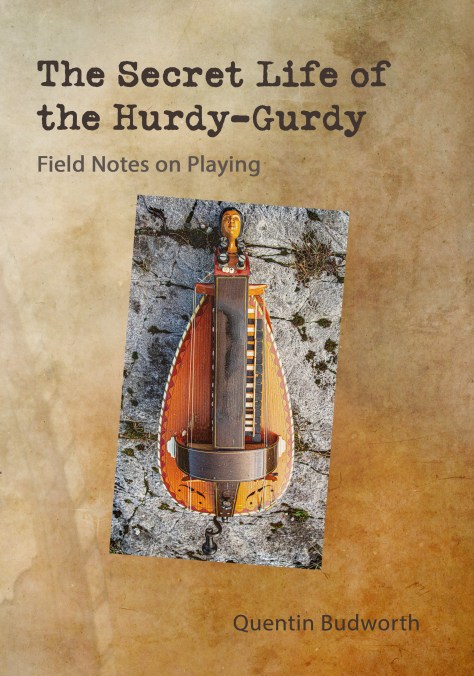
This season, I’ve been diving into a resource that feels less like a textbook and more like a late-night gathering of the world’s best players in a cosy tavern. It’s called “The Secret Life of the Hurdy-Gurdy: Field Notes On Playing” by Quentin Budworth.[1][2][3][4][5][6][7] If you are looking for hurdy-gurdy playing tips that go beyond the basics, this is your map to the hidden territories of the instrument.
The Collective Wisdom of 32 Giants
Let’s be honest: the hurdy-gurdy can be a solitary path. Unless you live in certain pockets of France or Hungary, you might be the only player in your town. That’s why Budworth’s book is such a revelation. It compiles the distilled knowledge, pedagogy, and personal theories of 32 renowned players from across the globe.[1][5][7]
We are talking about insights from heavyweights like Matthias Loibner, Patrick Bouffard, Michalina Malisz, German Diaz, and Steve Tyler.[5][6][7] Instead of one teacher’s dogma, you get a kaleidoscope of perspectives. It covers everything from the physics of the wheel to the social context of being a drone musician in the 21st century.
As you plan your holiday practice, here is how you can use this expert hurdy-gurdy book to structure a “Christmas Tune-Up” that will revolutionize your playing for the New Year.
Holiday Practice Session #1: The “Drone Deep-Dive” (Theory & Sound)
One of the recurring themes in Budworth’s field notes is the relationship between the player and the drone. It’s easy to get obsessed with the melody keyboard and forget the beast growling underneath.
The Exercise:
dedicate 20 minutes of your practice solely to your drones. No melody.
- Listen: Engage your trompette string. Vary your cranking speed by micro-amounts. How does the timbre change?
- Reflect: As detailed in the book, different players visualize their sound differently. Some see it as a vocal line; others as a rhythmic engine. Try to mentally shift your focus from “cranking a wheel” to “bowing a continuous circle.”
- Goal: Achieve a consistent buzz that breathes with your body movement, not just your arm muscle.
Holiday Practice Session #2: The “Rhythmic Reset” (Pedagogy & Technique)
The pedagogical section in The Secret Life of the Hurdy-Gurdy is fascinating because it reveals how different cultures approach rhythm. From the strict dance beats of Central France to the fluid, experimental styles of contemporary players, the book challenges you to rethink your coup de poignet.
The Exercise:
Pick a simple holiday tune—”God Rest Ye Merry Gentlemen” works beautifully with a drone—and strip it back.
- The 4-Stroke Challenge: Can you play the entire piece using a strict 4-stroke buzzing pattern?
- The Deconstruction: Now, remove the buzz entirely. Play the melody with a smooth, silent wheel. Can you still “feel” the rhythm without the percussion?
- Insight: Many of the experts in Budworth’s book argue that the buzz should be an accent, not a crutch. If your melody creates the groove without the trompette, you are winning.
Holiday Practice Session #3: The “Social Context” Jam (Performance)
Budworth includes fascinating chapters on the social contexts of the instrument.[6][7] The hurdy-gurdy isn’t just a museum piece; it’s a living, breathing social tool used for dancing, storytelling, and avant-garde performance.
The Exercise:
Record yourself.
- The Setup: Don’t just play for the wall. Set up your phone and imagine an audience.
- The Narrative: Before you play, speak a sentence about what the tune means to you (a tip often used by folk performers to ground themselves).
- The Review: Watch it back. Are you communicating with your body? Is the instrument a barrier between you and the listener, or a bridge? The “Field Notes” emphasise that how you hold yourself is as important as how you hold the handle.
Why You Need This Book on Your Shelf
In an era of generic YouTube tutorials, The Secret Life of the Hurdy-Gurdy stands out as a curated artefact of passion. It touches on theory, offering ways to understand modal music that clicks instantly for drone players. It dives into pedagogy, helping teachers and self-learners understand the how and why of learning.
But perhaps the best part is the ethos behind the book. Quentin Budworth is a champion of the independent creative spirit. In a move that aligns perfectly with the folk tradition, he has made the book available directly from the source.
The “Anti-Bezos” Deal: $35 (US) Direct to the Artist
Here is the best part of your Christmas Tune-Up. You can buy this book directly from Quentin, ensuring the money goes to the creator and the community, not a faceless warehouse.
Quentin is offering the book for $35 (US) (or £24.99 UK / €35 EU).[1][6][7]
How to Buy:
It’s old school, personal, and easy.[6][7]
- Send an email to quentinbudworth@yahoo.com.
- Include your postal address.[1][6][7]
- Quentin will reply with payment details (PayPal or Bank Transfer).
By buying direct, you are supporting the ecosystem that keeps this rare instrument alive. Plus, it makes a fantastic gift for the musician in your life who thinks they have everything.
Final Thoughts
This Christmas, don’t just practice mistakes. Practice with purpose. Let the collective wisdom of 32 masters guide your hand. Grab a copy of The Secret Life of the Hurdy-Gurdy, pour a glass of something warm, and let’s get that wheel spinning.
Happy Cranking and Merry Christmas!

 Quentin Budworth Musician