

There is something magically atmospheric about the sound of a hurdy-gurdy drifting through the crisp winter air. Whether it’s a Christmas market, a Yuletide festival, or simply busking for the holiday crowds, winter gigs can be lucrative and fun. However, they present a unique set of challenges. Playing the hurdy-gurdy requires precise finger dexterity, and you are essentially operating a complex wooden machine that hates the weather as much as you do.
Having performed in temperatures as low as minus 12°C (during a memorable stint at Beamish near Newcastle), I’ve learned the hard way that survival isn’t just about piling on clothes, it’s about strategy. Here is how to stay warm, keep safe, and avoid the dreaded “Michelin Man or woman” effect.
Preparation: Do the “Faffing” Indoors
Winter playing requires military-style preparation. Do not leave maintenance until you arrive at the venue.
- Set Up at Home: Faffing with cotton is no fun in the ice and gloom of midwinter. Trying to re-cotton a string or adjust a tangent with frozen fingers in fading light is a recipe for misery. Get your instrument perfectly regulated in the warmth and good light of your home before you set off.
- Acclimatisation: While you should set up in the warmth, you must respect thermal shock. Never take a warm gurdy directly into freezing air to play immediately. Store the instrument in a cold environment (like a secure porch, hallway, or vehicle boot). This lets the wood settle. This prevents the tuning from going wild and protects the structure from sudden contraction.
The Rosin Strategy: Darker is Better
Rosin’s behaviour changes drastically in low temperatures. Standard light/hard rosin can become brittle and glassy, sliding over the strings rather than gripping them.
- Choose the Right Rosin: In cold weather, softer, darker rosin is generally superior. Switch from a hard violin rosin to a dark cello or double bass rosin. Because it is naturally softer and stickier, it remains pliable in freezing temperatures where lighter rosin would just flake off as dust.
- Keep it Warm: Even soft rosin hates the cold. Keep your block of rosin in your trouser pocket. Your body heat will keep it at a workable consistency.
- Application: The general method of application remains the same, but because the wheel is cold, you need the rosin to be warm enough to adhere. If the rosin is warm (from your pocket) and the grade is soft (dark), it will coat the wheel evenly. If it’s cold and hard, it will skid across the surface.
The Art of Layering (Without Losing Mobility)
The golden rule is layering, but avoid the “Michelin Man” effect, where you have so many layers (vest, shirt, jumper, waistcoat, jacket, coat) that your arms stick out at 45-degree angles.
The Fix: Layer up, but try your outfit on with the instrument before you leave the house.
- Base Layer: High-quality thermals are non-negotiable.
- Trousers: Denim is useless in the cold. Opt for heavy external fabrics like heavy wool, moleskin, or thick corduroy.
- The Coat: A heavy, long overcoat traps heat around your legs and looks the part.
Extremities: Hands and Feet
- Left Hand: Fingerless gloves help keep the left hand warm and dextrous. You need exposed fingertips to feel the keys.
- Feet: Standing on frozen ground rapidly drains heat. Wear stout, waterproof boots with thermal furry insoles to create a barrier against the cold earth.
- Heat Packs: Keep chemical hand warmers in your pockets. Use them to “recharge” your hands (and your rosin!) between sets.
Safety and Surroundings
Working in winter means working in a hostile environment. You need to be hyper-aware of your surroundings.
- Beware of Ice: This is critical. You really don’t want to fall over with your instrument strapped on. If you slip on black ice, your instinct is to break your fall with your hands, risking breaking a wrist. A fall can result in a broken player and a smashed instrument. Tread carefully.
- Damp and Wind: As I found at Beamish, the damp is worse than the cold. It seeps into your bones and makes the wheel misbehave. Find a nook or stand with your back to a wall to cut the wind chill.
The Performance: Keep it Simple
Finally, adjust your mindset. You are not in a concert hall; you are battling the elements.
- Simplify the Repertoire: Your fingers will be colder than usual, and your instrument response may be sluggish. Keep the music simple. Save your energy and focus on keeping spirits high with strong, rhythmic tunes rather than complex ornamentation that might trip you up when your fingers are numb.
- Keep Moving: Stamping your feet and shifting your weight isn’t just part of the performance—it keeps the blood pumping and stops you from freezing to the spot. The addition of sleigh bells to the ankles adds a seasonal element to your nifty footwork.
- Reduce Cognitive Load: remember you have to get home in one piece so don’t overplay, keep sets and audience interactions short, snappy and fun.
My friend Rick from historical musicians Hautbois had a fantastic set of very large woollen mittens/driver’s gloves which he hung around his neck as part of his Edwardian musician costume. His secret trick was to hide a small hot water bottle in each mitten, ensuring warm, dextrous fingers throughout proceedings!
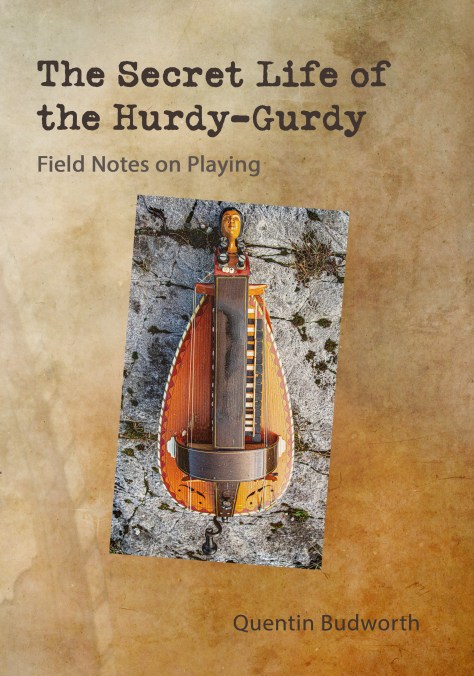
Quentin Budworth is author of ‘The Secret Life of the Hurdy-Gurdy : Field Notes on Playing,’ available by emailing quentinbudworth@yahoo.com

 Quentin Budworth Musician